
For many people living with Interstitial Cystitis/Bladder Pain Syndrome (IC/BPS), pain is the most challenging symptom. Burning sensations, bladder pressure, pelvic pain, urinary urgency, and frequent trips to the bathroom can significantly impact quality of life. While conventional treatments help some patients, many continue to search for safe and effective options to manage chronic pain.
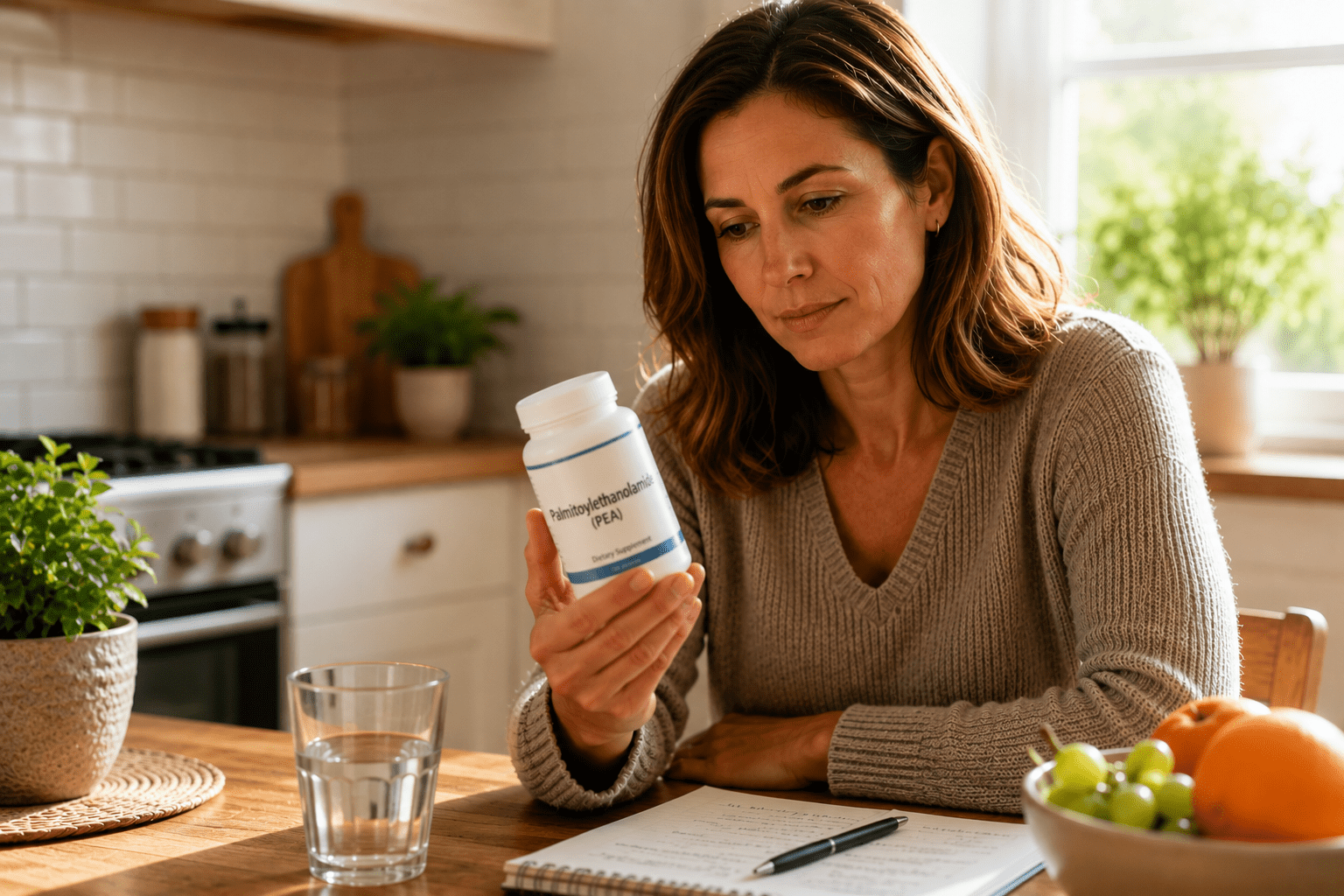
One supplement receiving increasing attention in both research and patient communities is Palmitoylethanolamide (PEA). This naturally occurring fatty acid compound has demonstrated anti-inflammatory and pain-relieving properties and may offer benefits for people with IC, particularly those experiencing chronic pelvic pain.
What is Palmitoylethanolamide (PEA)?
Palmitoylethanolamide, commonly known as PEA, is a naturally occurring lipid molecule produced by the body in response to inflammation and tissue damage. It belongs to a group of compounds called fatty acid amides and plays an important role in regulating pain, inflammation, and immune responses.
Unlike opioids, PEA is not addictive and does not act as a narcotic pain medication. Instead, it appears to support the body’s natural mechanisms for controlling inflammation and calming overactive pain signaling pathways. Research suggests that PEA may help regulate mast cell activity, reduce neuroinflammation, and support the body’s endocannabinoid system.
Why is PEA relevant for Interstitial Cystitis?
IC/BPS is increasingly understood as a condition involving multiple mechanisms, including:
- Chronic inflammation
- Mast cell activation
- Nerve hypersensitivity
- Central sensitization
- Pelvic floor dysfunction
These same mechanisms are believed to contribute to chronic pelvic pain conditions such as vulvodynia, endometriosis, and chronic prostatitis. Interestingly, many IC patients experience more than one of these disorders simultaneously. Community discussions among patients frequently report overlapping symptoms and diagnoses.
Because PEA appears to target several of these underlying pathways, researchers have explored whether it could help reduce pain and improve bladder symptoms in IC patients.
What does the research show?
Human study in Interstitial Cystitis
One of the most encouraging studies involved 32 patients with IC/BPS who used a micronized PEA formulation for six months. Researchers reported a significant and progressive reduction in pain intensity throughout treatment. Participants also experienced improvements in urinary frequency and some improvement in bladder capacity. Importantly, no significant adverse events were reported during the study.
These findings suggest that PEA may not only help address pain but could also positively influence some of the urinary symptoms associated with IC.
Animal research supports bladder protection
Research published in the Journal of Urology investigated PEA in a rat model of cystitis. The researchers found that PEA has anti-inflammatory and analgesic properties and explored its potential protective effects against bladder inflammation. The study concluded that externally administered PEA may help protect against cystitis-related damage and inflammation.
Although animal studies cannot be directly translated to humans, they provide important biological evidence supporting the use of PEA in bladder-related pain conditions.
PEA and Chronic Pelvic Pain
The potential benefits of PEA extend beyond IC.
Recent reviews and clinical studies have reported improvements in:
- Chronic pelvic pain
- Vulvodynia
- Endometriosis-associated pain
- Chronic prostatitis/chronic pelvic pain syndrome
- Menstrual pain
A recent meta-analysis examining multiple PEA studies found significant reductions in pain and improvements in quality of life across several pain conditions. Benefits were observed for inflammatory pain, nerve-related pain, and chronic pain states. Researchers concluded that PEA may represent a promising alternative or complement to traditional pain management approaches.
This is particularly relevant because many IC patients experience overlapping pelvic pain disorders that can amplify symptoms and complicate treatment.
How does PEA work?
Researchers believe PEA works through several mechanisms:
Mast Cell stabilization
Mast cells are immune cells that release inflammatory chemicals and are often found in increased numbers within the bladders of IC patients. Overactive mast cells may contribute to pain, urgency, and inflammation.
PEA appears to help regulate mast cell activation, potentially reducing the release of inflammatory mediators.
Reduction of Neuroinflammation
Chronic pain conditions often involve inflammation within the nervous system itself. PEA may help calm overactive pain pathways and reduce the sensitivity of nerves involved in pelvic pain.
Endocannabinoid system support
PEA interacts with pathways related to the endocannabinoid system, which plays a role in pain perception, inflammation, and immune regulation. Unlike cannabis-derived compounds, PEA does not produce psychoactive effects.
Is PEA safe?
One reason PEA has gained popularity is its favorable safety profile.
Clinical studies have generally found PEA to be well tolerated, with few reported side effects. A recent systematic review examining dozens of randomized controlled trials concluded that PEA is a safe anti-neuroinflammatory supplement with a strong safety record across multiple patient populations.
However, as with any supplement, patients should discuss its use with their healthcare provider, especially if they are pregnant, breastfeeding, or taking prescription medications.
Should IC patients consider PEA?
While PEA is not a cure for Interstitial Cystitis, the current evidence suggests it may be a valuable addition to a comprehensive treatment plan, particularly for patients struggling with chronic pelvic pain, bladder discomfort, or central sensitization.
The most promising findings include:
- Significant reductions in IC-related pain
- Improvements in urinary frequency
- Potential reduction of bladder inflammation
- Benefits across multiple chronic pelvic pain conditions
- Excellent safety profile
Larger placebo-controlled clinical trials are still needed, but the available research and growing patient experience suggest that PEA deserves attention as a potential non-opioid option for managing IC symptoms.
Key Takeaway
Palmitoylethanolamide (PEA) is emerging as one of the most promising natural compounds for chronic pelvic pain and Interstitial Cystitis. By targeting inflammation, mast cell activity, and nerve hypersensitivity, PEA may help reduce pain and improve quality of life for some IC patients. Although more research is needed, current evidence supports its role as a safe and potentially effective adjunct therapy for bladder pain syndrome.
This content is for educational purposes only and does not provide medical advice. Always consult a qualified healthcare professional regarding diagnosis or management of IC.
References
- Biasiotta A, et al. Micronized Palmitoylethanolamide in the Treatment of Bladder Pain Syndrome/Interstitial Cystitis. Presented at the Annual Meeting of the American Urological Association. Available at: https://www.auajournals.org/doi/10.1097/01.JU.0000556325.30667.7c
- Interstitial Cystitis Network. PEA Reduces Pelvic Pain in IC, Vulvodynia, Endometriosis, Prostatitis & Menstrual Cramping. Available at: https://www.icnetwork.org/pea-reduces-pelvic-pain-in-ic-vulvodynia-endometriosis-prostatitis-now-menstrual-cramping/
- D’Agostino G, et al. Urology. Palmitoylethanolamide Protects Against the Development of Experimental Cystitis in the Rat. Published in the Journal of Urology.