
For many people living with Interstitial Cystitis (IC) or Bladder Pain Syndrome (BPS), staying hydrated is an important part of managing symptoms.
But not all beverages affect the bladder in the same way.
One common question is:
Can sparkling water make Interstitial Cystitis symptoms worse?
Some people report increased bladder discomfort after drinking carbonated beverages, while others tolerate them without any problems. The answer often depends on the individual.
Here’s what current evidence suggests.
What Is Sparkling Water?
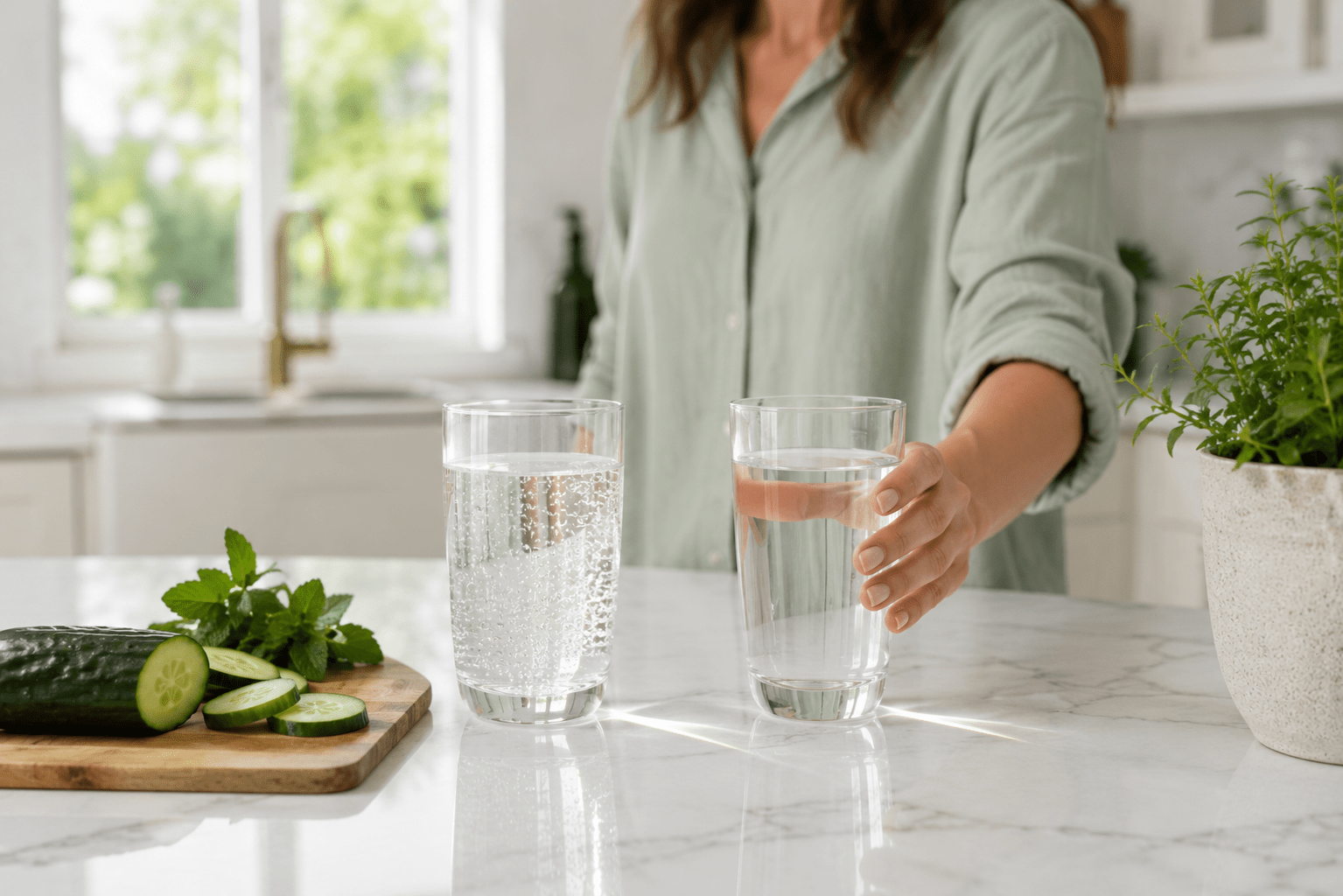
Sparkling water is simply water that contains dissolved carbon dioxide (CO₂), creating its characteristic bubbles.
There are several types, including:
- Sparkling mineral water
- Club soda
- Seltzer water
- Carbonated spring water
Some products contain only water and carbonation, while others include:
- Natural flavors
- Artificial sweeteners
- Citric acid
- Sodium
- Added minerals
These additional ingredients may influence how well the drink is tolerated.
Can Carbonation Irritate the Bladder?
Many people with IC report that carbonated beverages can trigger symptoms such as:
- Bladder discomfort
- Increased urgency
- More frequent urination
- A feeling of bladder pressure
Although scientific evidence is limited, clinical experience and patient reports suggest that carbonation may irritate the bladder in some individuals.
Because of this, many IC elimination diets recommend temporarily avoiding carbonated drinks while identifying personal triggers.
Does Carbonated Water Increase Inflammation?
You may hear claims that carbonation increases inflammation throughout the body.
Current scientific evidence does not support this.
Carbon dioxide itself has not been shown to increase chronic inflammation or cause Interstitial Cystitis.
If sparkling water triggers symptoms, the reason is more likely related to local bladder irritation or individual sensitivity rather than systemic inflammation.
Why Do Some People Feel Worse After Drinking Sparkling Water?
Several factors may contribute.
1. Bladder Sensitivity
People with IC often have a bladder that is more sensitive than usual.
Even mild irritation from carbonation may trigger discomfort in susceptible individuals.
2. Increased Bladder Sensation
The bubbles produced by carbonation may create a sensation of fullness or pressure that some people perceive more intensely.
3. Added Ingredients
Many flavored sparkling waters contain ingredients that may be more problematic than the carbonation itself, including:
- Citric acid
- Artificial sweeteners
- Caffeine
- Fruit flavorings
These ingredients are already recognized as potential bladder irritants for some people with IC.
Should You Switch to Still Water?
If you notice that sparkling water consistently worsens your symptoms, switching to still water may be worthwhile.
Many healthcare professionals recommend:
- Plain still water
- Filtered water
- Water infused with tolerated fruits or herbs (without citrus if sensitive)
Good hydration helps support overall urinary tract health, although drinking excessive amounts of water is generally unnecessary.
How to Find Out if Sparkling Water Is a Trigger
Because IC affects everyone differently, the best approach is to observe your own symptoms.
Try this simple method:
- Avoid sparkling water for one to two weeks.
- Monitor your symptoms.
- Reintroduce plain sparkling water without added flavors.
- Compare how you feel over the following 24–48 hours.
Keeping a food and symptom diary can help identify consistent patterns.
Other Drinks That May Trigger IC Symptoms
Some commonly reported bladder irritants include:
- Coffee
- Black tea
- Green tea (for some people)
- Alcohol
- Energy drinks
- Citrus juices
- Soft drinks
- Artificially sweetened beverages
Not everyone reacts to these drinks, which is why personalization is important.
Key Takeaways
- Sparkling water does not appear to increase inflammation throughout the body.
- Some people with IC find that carbonation irritates the bladder and worsens symptoms.
- Flavored sparkling waters may be more likely to cause problems because of added ingredients such as citric acid or artificial sweeteners.
- Plain still water is often the safest choice if you are experiencing frequent flares.
- Keeping a symptom diary is one of the best ways to identify your personal beverage triggers.
Conclusion
Sparkling water is not automatically off-limits if you have Interstitial Cystitis, but it may trigger symptoms for some people. The carbonation itself has not been shown to increase chronic inflammation, yet many individuals with sensitive bladders report increased urgency, pressure, or discomfort after drinking carbonated beverages. If you suspect sparkling water is contributing to your symptoms, try replacing it with plain still water for a short period and monitor how you feel. Finding your personal triggers is often more helpful than following broad dietary rules.
This content is for educational purposes only and does not provide medical advice. Always consult a qualified healthcare professional regarding diagnosis or management of IC.
Frequently Asked Questions
Is sparkling water bad for everyone with Interstitial Cystitis?
No. Some people tolerate it well, while others notice increased bladder irritation.
Does carbonation cause bladder inflammation?
Current evidence does not show that carbonation causes bladder inflammation. However, it may irritate sensitive bladders in some individuals.
Is mineral water better than sparkling water?
If the mineral water is still (non-carbonated), many people with IC find it easier to tolerate than carbonated drinks.
What is the best drink for people with IC?
For many individuals, plain still water is the best-tolerated beverage. However, personal triggers vary, and hydration choices should be individualized.